
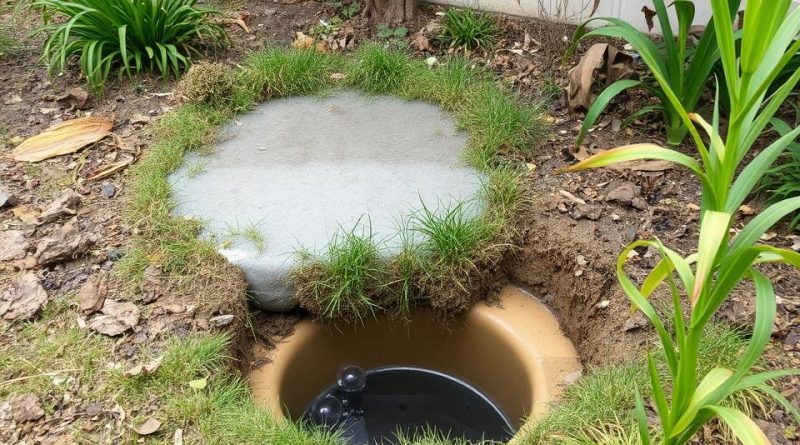
It’s key to know when your septic tank needs emptying to keep your house’s plumbing healthy. Being alert to signs that your septic system is full can save you from expensive fixes and health risks. This guide gives smart advice on spotting the right time for a tank pump-out.
The United States Environmental Protection Agency (EPA) suggests pumping septic tanks every 3 to 5 years. Yet, how often you should do it depends on your tank’s size, household size, and water use. A too-full tank can cause backups, bad smells, and slow drains.
Watching for early warning signs is crucial to dodge these issues. Next, we’ll discuss major signs that your septic system needs looking after.
In rural spots, septic tanks and soil absorption systems treat waste water. They are key for wastewater management outside cities. Septic tanks catch and break down solids from home water waste. About half of these solids turn into liquids and gases, making less sludge and scum.
Septic tank function involves separating solids from liquids. Then, the cleaned water goes into a drainfield for more cleaning. A typical 1,000-gallon tank, for up to four-bedroom homes, needs regular checks and septic system operation care. Pumping needs differ: a four-person family does it every 3 years, and a two-person family, every 6 years.
Not doing regular maintenance can cause big problems. For instance, not pumping when sludge hits 35% of tank volume can ruin the drainfield and pollute groundwater. Maintenance includes removing scum, mixing sludge, and checking tees or baffles for wear. Regular checks help avoid bad smells and sewage backup.
| Septic Tank Size | Household Size | Pumping Frequency |
|---|---|---|
| 1,000 gallons | Family of 4 | Every 3 years |
| 1,000 gallons | Family of 2 | Every 6 years |
With good care, septic tanks can last more than 50 years. It’s important to check them often and dispose of waste right. Flushing the wrong things, like baby wipes, can lead to septic failure and health dangers from toxic gases and water pollution. Safely getting rid of septage, what’s pumped out, is vital to avoid these dangers.
Knowing how your septic tank works and taking care of it is crucial for house owners. Proper care lengthens its life and ensures good wastewater management and keeps the environment safe.
Knowing when your septic tank is full helps keep it working right and saves you money on big repairs. Most septic tanks need to be pumped every 3 to 5 years. But, if you have a big family, you might need to do it more often. Spotting the signs early can avoid trouble and mess in your house.
If water drains slowly in your sinks, bathtubs, and toilets, pay attention. This may mean your septic tank is almost full. About half of septic tank owners have faced this issue, usually because the tank is full or there’s a blockage.
A bad smell coming from your drains or yard is not a good sign either. Around 10% of homes with septic tanks notice these smells before they get their tank pumped. These odors suggest your tank might be too full or leaking.
Seeing water on the ground or really green grass near your septic tank is a warning. It could mean your tank is overflowing or leaking. Vibrant grass shows your system needs quick attention.
Keeping your septic tank in good shape is very important. Pumping it regularly can make it last 25% longer and saves you a lot of money. Not taking care of it can lead to repairs that cost thousands of dollars. Broken systems can also harm the environment by leaking sewage.
To keep your septic tank working well, pump it every 3 to 5 years. Bigger families may need to do this more, like every 2 years or even every year. Watching for full tank signs helps homeowners prevent damage to their home and the environment.
| Key Indicators | Action Needed |
|---|---|
| Slow Draining | Inspect and potentially pump the tank |
| Sewage Odor | Schedule immediate pumping |
| Standing Water/ Lush Grass | Check for leaks and pump tank |
Seeing pooled water in your yard is worrying, especially if it indicates your septic tank might be overflowing. If water collects on your lawn, particularly when it’s not raining, your septic system could be in trouble. This usually happens if there’s a leak in the system or if the tank is full.
Septic tanks should last around 25-30 years if they’re checked every three to five years. An inspection costs about $300 and can spot issues early. Often, too much water use fills the tank too fast. This issue can get worse with a lot of rain or if tree roots block the outlet pipe.
When you notice wastewater on the ground, think about a few things:
If water is collecting near your septic tank, don’t ignore it. Getting it checked quickly can stop bigger, more expensive issues. Spotting these problems early keeps your septic system working well. If problems keep happening, it’s smart to call a septic professional right away.
Slow drains in your house are not just annoying. They might be the first sign you have a septic problem. If water backs up in sinks, baths, and toilets, finding solutions quickly is crucial. Proper septic system care prevents bigger issues, making everything run smoothly.
The Environmental Protection Agency says septic tanks need emptying every 3 to 5 years for best performance. But this depends on your family size, septic tank size, water use, and solid waste.
About 20-30% of homes deal with slow drains. This issue can point to blocked pipes or even serious sewer line problems.
Spotting septic problems early is key. Pooling water, slow drains, and bad smells are warning signs. If drains are slow in different parts of your home, it might mean a clog or full tank. Keeping up with septic system care helps dodge these issues.
Many homeowners skip routine maintenance, leading to drainage problems in 15-25% of houses. Since septic tanks last 20-30 years, regular care can cut down system failure risks by 75%. Homeowners spend $250 to $500 yearly on plumbing to avoid these issues.
To keep septic systems working well, learning about and using slow drainage solutions is important.
| Issue | Percentage of Homes Affected | Suggested Solution |
|---|---|---|
| Slow Drains | 20-30% | Explore slow drainage solutions |
| Gurgling Noises | 5-10% | Check for blockages or full tank |
| Sewer Line Issues | 10-15% | Immediate plumbing intervention |
| Backed-Up Drains | 15-25% | Ensure regular septic tank emptying |
Knowing these facts helps us take care of our septic systems. This way, our home plumbing works well without problems.
Gurgling pipes suggest trouble in your septic system. They result from air bubbles going back into the pipes. This mostly happens when there’s too much sludge or a blockage in the septic tank. A big reason for gurgling is clogged sewer pipes which slow down the water flow.
Spotting the signs early, like these noises, is key to avoiding big problems. Heavy sludge buildup, especially after a lot of rain, means too much pressure in the tank. This makes air push up through the pipes, causing the gurgling sound you hear.
Wondering if your septic tank is full? Constant gurgling noises are a giveaway. Another sign is when all drains in the house are slow. Ignoring these hints could lead to bigger issues, such as backups or a less efficient septic system.
Regular check-ups and maintenance are crucial to prevent these problems. Depending on your household and how much you use the system, you should clean out your septic tank every 3-5 years. Inspections also include checking for blocked vents important for removing sewer gases and aiding waste flow. Not venting sewer gases properly can bring them into your home, risking your family’s health.
Keeping water column pressure under 20 feet helps avoid gurgling noises. Heavy rain or floods put extra strain on your septic system, which needs careful management. Otherwise, you’re looking at health dangers in 60% of homes with septic issues.
Getting a pro plumber to check your system is a good plan. They can catch problems early, saving you money and keeping your home safe.
When you smell bad odors at home, it’s more than just annoying. It often means there’s a big problem with your septic system. Finding out where these smells come from is key. They are usually caused by gases like hydrogen sulfide, which come from breaking down organic material. If you start noticing these smells, your septic system might be backing up.
Bad smells can show problems with your septic system and other issues. For example, if a tank hasn’t been cleaned in over three years, you risk sewage backups. Regular cleaning is very important to avoid these problems. If you don’t take care of your septic system, water may stand around drainfields. This means the soil isn’t absorbing the wastewater well, which is a big risk for contamination.
About 30% of septic systems might have a sewage backup sometime. Regular maintenance is essential to prevent this. Without proper care, up to 40% of homes could face wastewater contamination. It’s best to pump your septic tank every 3 to 5 years. The exact time depends on your home and tank size.
Ignoring septic system care can lead to big troubles. Replacing a failed septic system can cost between $4,000 and $15,000. But the yearly cost for pumping and inspection is only $150 to $500. So, regular maintenance helps with odor control and keeps your system working longer. This can extend its life by 20% to 30%.
Below is a comparative analysis of the common causes and effects of septic tank problems:
| Issue | Cause | Effect |
|---|---|---|
| Foul Odors | Buildup of hydrogen sulfide gas | Sign of septic backup |
| Sewage Backup | Uncleaned tank (over 3 years) | Increased risk of contamination |
| Standing Water | Poor wastewater absorption | Possible soil contamination |
| Lush, Green Grass | Excess waste seepage | Increased soil nutrient levels |
| Slow Drains | Overly full septic tank | Up to 50% longer drain times |
So, keeping up with your septic tank maintenance can stop bad odors from starting. It makes sure your system works well. And it keeps your home safe from possible dangers.
Seeing extra lush, green grass in spots of your yard can signal septic tank leaks. These areas often show there’s a problem with your septic system. If your septic tank is full, wastewater can leak out and feed the grass nutrients. This makes it look brighter and healthier than the rest of your lawn.
But septic leaks do more than make your yard look nice. They can cause big issues under the surface, hurting your septic system’s health. If your grass is unusually green, it might mean your tank is too full and needs quick action. Keeping an eye on your system and regular upkeep are key to avoiding worse problems.
Over half of septic system failures come from not maintaining them well. Owners should get their tanks checked and pumped by professionals every 3 to 5 years. This depends on how many people live in your house and how much water you all use. Not paying attention to signs of leaks can cause big environmental harm and expensive fixes. For example, things that can’t break down and block the system cause about 30% of septic problems. This shows how important it is to use your system wisely and keep it in good shape.
Noticeable lush grass calls for a check on other signs of septic troubles. If your sinks drain slowly, or there’s a bad smell near drains and toilets, or if you hear odd sounds from your pipes, it’s time to get help. Dealing with these signs early helps your septic system work better and last longer.
Sewage backups are more than annoying; they signal possible emergencies in your septic system. Learning to prevent these issues helps save stress and money. Knowing when your septic tank is full is crucial. Regular check-ups and care stop backups and keep the system working long term.
Quick action is key when facing a sewage backup. A broken septic system can lead to health risks by releasing untreated sewage. Annual checks can spot problems like blockages or failing drainfields early. Signs like slow draining or bad smells mean you need to act fast to stop bigger problems.
Experts often suggest emptying your septic tank every 3-5 years, considering your home’s size and system usage. Avoid flushing “flushable” wipes and feminine products to prevent backups. Getting professional help quickly is crucial to fix issues and avoid bigger costs and problems.
Keeping your septic system healthy means watching for signs of trouble, like constant bad smells or slow draining. Handling these signs right away can prevent septic disasters. Following expert advice and regular maintenance is key to stop backups. This way, your septic system stays healthy, efficient, and lasts longer.
Having trouble flushing your toilet might mean your septic system needs a checkup. Normally, it should be easy to flush away waste. But, things like aging systems can make this hard. Sometimes, even after vigorous plunging, the problem doesn’t go away for good.
Many issues can cause flushing issues septic system. Old plumbing might need more flushes than newer setups. Also, new toilets that use less water might not flush well with a bad system. They use about 1.5 gallons per flush, unlike older ones that use up to 5 gallons.
Spotting septic tank signs like slow draining and needing several flushes is crucial. These could mean it’s time for a pump out, usually needed every 3 years. Yet, if flushing problems stay even after toilet maintenance, it may point to issues like incorrect plumbing slope. Proper slope helps avoid clogs by moving solids along.
New toilets can also have trouble, maybe due to septic problems. When only some toilets in a house don’t work well, it’s a sign. It shows some parts of the plumbing might be clogged. Fixing this may require cleaning out the waste lines.
Keeping up with your septic system might be low on your list, but it’s really important. Good care of your septic system saves you time and money. It also makes your home healthier to live in.
Experts say to check your septic system every six months. They suggest pumping the septic tank every one to two years for the best care. Doing these checks and pumps can make your septic system last 25% to 30% longer. That means it can work well for 20 to 30 years if looked after regularly.
Want to know why septic maintenance matters? Let’s look at some facts:
| Benefits | Statistics |
|---|---|
| Cost Savings | Keeping up with maintenance can save you 30% to 50% in future repair costs. |
| Prolonged Lifespan | Good care can make your septic system last 15 to 25 years longer. |
| Reduced Failures | About 60% of septic system failures happen because they’re not maintained well. |
| Property Value | A well-looked-after system can make your property value go up by 10% to 15%. |
| Health and Safety | Up to 90% less odor is reported in homes with well-maintained septic systems. |
| Environmental Benefits | Good maintenance can cut the chance of contaminating the environment by up to 80%. |
Good septic tank care means you keep up with best practices. This includes cleaning septic filters. Not doing this can lead to costly repairs, between $5,000 and $20,000. Also, each person in a house usually adds 70 gallons of wastewater a day. This affects how often you need to maintain your septic tank.
Keeping records of your septic services can boost your home’s resale value. It makes your place more appealing to buyers. Plus, well-kept septic systems can cut the costs of wastewater processing by up to 50%. So, taking good care of your septic system is very worthwhile.
Septic system tech has grown a lot in recent years. Traditional systems often caused water contamination through leaks. With more people living close together in places like Lehigh Acres, the problem got worse.
Adding tech to monitor septic tanks is a big step forward. Sensors now give real-time info on tank levels and flow. This makes it easier to keep an eye on things and saves money too.
With remote monitoring, we can watch septic systems all the time. This is great for old systems needing to meet new rules. It also helps fix things before they break, keeping Naples and Fort Myers happy.
There are now cleaner ways to break down waste, like with ATUs. This, plus wetlands and biofilters, helps nature and cuts pollution.
These smart systems mean no clogged drains and less pumping. New green treatments also offer lasting septic solutions. As we adopt these, water and health will improve in the U.S. and elsewhere.
To sum up, adding new tech to septic systems is a big improvement. It helps protect health and the planet. And it makes waste management cheaper and more sustainable.
Finding out your septic tank is overflowing can be scary. It’s important to know what to do to limit the damage and keep your home and the environment safe. Here are some steps to handle an overflow the right way.
First, use less water right away. Experts say to cut back water use by 75% to help the overflowing system. Skip using dishwashers, washing machines, and taking long showers. Stick to only using water when you really need to. If it’s an emergency, call septic services right away. They can check and fix problems with the drain lines or the septic tank. About 75% of overflows need a pro to fix them, showing how crucial it is to get help quickly.
Then, try to figure out why the overflow happened. Heavy rain, using a lot of water each day, and very wet ground can all cause problems with your septic system. In places with a lot of snow or rain, melting snow can make things worse. After holidays, be careful because using more water than usual can increase the risk of overflow. Doing things like pumping the tank every few years can stop half of the failures from happening.
Next, get a check-up from a trusted company like Blackstone Septic Service. Not fixing an overflow can cost a lot, between $1,500 to $5,000, and harm the environment. Sewage can get into local waters in two days. Getting your system checked every few years and avoiding bad chemicals can make your septic last longer and prevent problems.
Taking care of a septic overflow quickly with these steps helps keep your house safe, controls repair costs, and keeps your septic working well.