
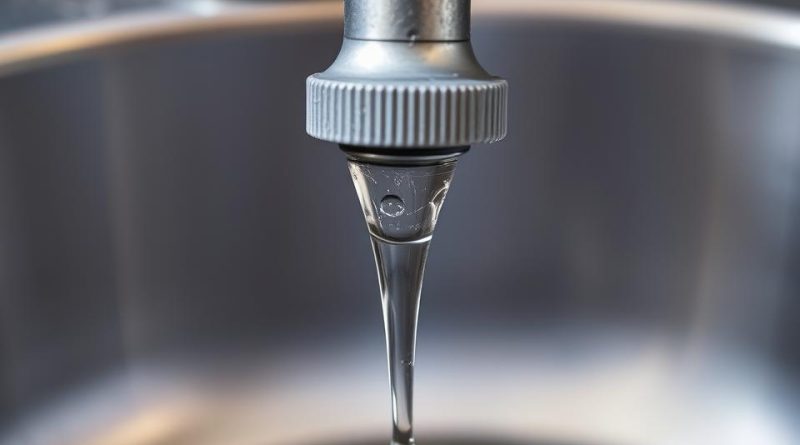
Having low water pressure in your kitchen sink can turn simple tasks into a struggle. About 20% of homeowners deal with this. Often, you won’t need a professional to fix it. Let’s figure out why your sink’s water pressure dropped and how to fix it.
The main reason is often a clogged aerator, cutting water flow by nearly a third. Other problems might be with the faucet cartridge, leaks in the pipes, or issues with the pressure reducing valve (PRV). Knowing these points helps you pinpoint and solve the issue. Keep reading to learn how to get your sink working right again!
Low water pressure in your sink is annoying. It’s often due to common problems. Knowing these can help fix the water flow.
A clogged aerator is a big reason for low water pressure in sinks. About 20% of kitchen water flow issues come from this. If you have hard water, your aerator might clog 50% more often. This happens because minerals and sediment block the water.
Also, a clogged or damaged faucet cartridge is another common cause. It makes up 15% of kitchen faucet water pressure issues. The cartridge controls water output, and clogs can slow down flow a lot.
Leaks in the water pipes are a huge factor too, causing about 25% of these problems. If your plumbing system has hidden leaks, your pressure could drop. It’s estimated that 10-20% of homes have a hidden leak that lowers their water pressure.
Sometimes, malfunctioning shut-off valves are to blame, seen in up to 10% of cases. This usually happens after plumbing work when valves aren’t fully opened again.
Also, city water supply problems can affect many homes at once. During maintenance, around 40% of homes in an area might see a drop in pressure.
| Cause | Percentage of Occurrences | Additional Notes |
|---|---|---|
| Clogged Aerator | 20% | More frequent in homes with hard water |
| Clogged/Damaged Cartridges | 15% | Common in older faucets |
| Pipe Leaks | 25% | Includes hidden leaks |
| Malfunctioning Shut-off Valves | 10% | Often occurs after repairs |
| Municipal Supply Issues | 40% | Affects multiple homes during maintenance |
Wondering “why is my sink water pressure so low” can have many answers. Solving it starts with a thorough check and understanding the root causes. Whether it’s an aerator issue or a leak somewhere, knowing the exact problem is crucial for fixing it.
If you notice a sudden drop in water pressure, your aerator might be clogged. This is a common reason for low water pressure in sinks. Aerators save water and manage flow, but they can get blocked with minerals and debris.
Improving water flow might be as simple as removing the aerator. Cleaning it every six months can stop clogs from minerals. This is especially important in places with hard water.
A sure sign of a clogged aerator is when water flow drops by up to 40%. Sometimes, low pressure means a new aerator is needed, especially if the problem doesn’t go away.
To avoid clogged aerators, think about getting a water softener. This reduces mineral buildup. Another tip is to soak the aerator in vinegar overnight. It clears out sediment in most cases, so you might not need a new one.
Cleaning a clogged aerator is pretty simple but very important. It helps fix problems when your kitchen sink lost water pressure. It’s also useful if you’re asking yourself, why is my sink pressure low? Many homes, more than 80% in developed places, use faucets with aerators. A blocked aerator can cut your water flow in half.
To start, here are the steps:
Keeping the aerator clean, by checking it every 6-12 months, can make your water flow better. It might increase by 1-2 gallons per minute. This could save a family about $60 every year on their water bill. Doing this regularly solves the problem of low sink pressure and keeps the water running smoothly.
Here’s a quick look at important facts about aerator upkeep:
| Aspect | Details |
|---|---|
| Impact on Flow | Can decrease flow by up to 50% |
| Maintenance Frequency | Every 6-12 months |
| Water Flow Improvement | Averages 1-2 GPM |
| Cost Savings | Approximately $60/year |
| Effective Cleaning Agents | Vinegar, CLR |
| Risk of DIY Damage | Nearly 20% |
Many of us find the water in our sinks flows weakly without knowing why. The question why is my sink water pressure low can lead to many answers. Causes range from clogged aerators, bad cartridges, to blocked pipes and old supply lines. Figuring out these reasons is key to fixing the water pressure.
Plbg.com is a site with over 700,000 plumbing posts since 1996. It shows lots of people talking about weak sink water pressure. They often say kitchen sinks have more problems than other fixtures. This might be due to not changing old supply lines or blockages by things like dirt. It shows the importance of keeping pipes clean.
Back flushing the plumbing can be a good move. Experts suggest connecting a hose to the kitchen sink’s water lines and running it for a few minutes. This can clear out any buildup or rust. For older buildings, it’s common for the pipes to get clogged with sediment. Checking and swapping out clogged aerators and cartridges often fixes water pressure issues. Forum users note that blocked aerators, due to minerals or debris, are a common culprit. Cleaning or replacing these can make a big difference in water usage and pressure.
New installations like dishwashers can mess with water pressure too. There was a case where adding a dishwasher to an old building made the water pressure drop. Sometimes, vibrations from nearby traffic or building work can also cause issues by accidentally changing valve settings.
Keeping up with maintenance helps a lot. This means cleaning out water heaters, looking for leaks, and checking that valves work right. Doing these things not only gets your water pressure back to normal but also answers the question why is my sink water pressure low.
When your kitchen sink’s water pressure drops, the faucet cartridge might be the reason. This small part plays a big role in controlling water flow. Just like the aerator, it can get blocked by minerals and debris, causing low water pressure.
To check the cartridge, first take off the faucet’s handle. Look for any signs of damage or buildup. If it seems clogged or broken, cleaning or replacing it could help the water flow better.
Here are some stats that show the importance of the faucet cartridge:
| Cause of Low Water Pressure | Percentage Contribution |
|---|---|
| Clogged Aerators | 50% |
| Clogged Cartridges | 30% |
| Plumbing Leaks | 15% |
| Errors in Shut-Off Valves | 10% |
If you ignore the faucet cartridge, your sink might always have low pressure. If the water flow drops, check this part right away. Since 30% of water pressure problems come from clogged cartridges, fixing it is key.
Leak detection is crucial if you notice your kitchen sink losing water pressure. Pipes with leaks can significantly lower water pressure, affecting one or two fixtures at first. Even small leaks can hurt pressure just like big ones do. It’s key to fix minor leaks fast.
Start by looking under sinks for signs of moisture or damaged pipes. In older homes, pipes made of iron, copper, or steel may corrode. This could narrow the pipes and lower water pressure. A drop in pressure when using several faucets may mean many fixtures are affected at once.
To check for leaks, try a water meter test. Make sure all water is off and watch your meter. If the meter’s reading goes up after two hours, you might have a leak. Dirt, rust, and minerals can clog fixture aerators, reducing pressure. This shows the importance of regular cleaning.
Fixing leaks fast is important. If using multiple faucets drops the pressure, your main supply line might have issues. Things like tree roots or buildup in your pipes can slow down water flow.
| Action | Description |
|---|---|
| Visual Inspection | Look for unexplained moisture or damaged pipes under sinks. |
| Water Meter Test | Turn off water sources and monitor meter changes. |
| Regular Maintenance | Clean fixture aerators to avoid reducing water pressure. |
| Timely Repair | Fix minor leaks quickly to maintain optimal water flow and pressure. |
Water supply line issues often cause low water pressure in your sink. They can arise from a constriction, blockage, or leak. This greatly affects your water pressure. Many people find the answer to “why is the water pressure low in my sink” by looking into these line problems.
Normal water pressure for homes should be between 45 to 55 psi. It typically ranges from 45 to 80 psi. When it drops below 40 psi, your sink might not work as well. And if it’s under 30 psi, that’s way too low. If “why is my sink water pressure low?” crosses your mind, your water supply line might be the issue.
Let’s take a closer look at how to identify these troubles:
If these steps don’t fix the low water pressure, you may need a plumber. Sometimes, supply lines are too damaged and must be replaced to get your flow back to normal.
Comparing your issue with standard performance can help you see the problem more clearly:
| Parameter | Standard Range | Potential Issue Indicator |
|---|---|---|
| Water Pressure (psi) | 45-55 psi (typical 45-80 psi) | Below 40 psi (Low), Below 30 psi (Excessive low) |
| Flow Rate (GPM) | 1.0-2.0 GPM | Below 1.0 GPM |
Keeping your water supply lines in check is key. It solves the low pressure issue and boosts your plumbing’s efficiency.
Asking “why is my sink water pressure low” can lead us to the Pressure Reducing Valve (PRV). This key part controls the water pressure coming into your house. It keeps pressure in a safe range, 40-80 pounds per square inch (psi), as plumbing rules say. This helps avoid damage from too much pressure.
PRVs don’t fail all at once, which makes small problems hard to spot early. When they do fail, your whole house might experience low water pressure. This can become obvious when several guests use water at the same time. So, low sink pressure could mean PRV troubles.
Experiencing lower water pressure when using many faucets points to a PRV issue. Also, hearing loud bangs when turning off the water can mean too much pressure. Both are signs the PRV might not work right.
PRVs usually last about 4 to 5 years. Signs of failure include wet or muddy spots in your yard, often seen with outdoor PRVs. For houses built after 2010, finding PRVs can be harder as they might be in garages or under stairs. Leaks from the PRV mean you need to fix it right away.
| Symptoms | Potential PRV Issues |
|---|---|
| Uniformly low pressure throughout the home | Failing or improperly adjusted PRV |
| Decrease in pressure when using multiple faucets | Faulty PRV |
| Hammering noises on turning off water | Build-up of extra pressure in the plumbing system |
| Visible leaks at regulator | PRV malfunction |
High water pressure and hard water can break water-linked appliances. Even small plumbing leaks can quickly cause damage. Fixing or replacing the PRV when needed helps avoid these issues. Timely action keeps water pressure right, making low sink pressure questions disappear.
Ever wondered why your kitchen sink’s water pressure dropped? It often links to sediment build-up in water heaters. Sediment, made of minerals and debris, piles up over time, more so in hard water areas. This not only shrinks your heater’s capacity but also lowers water pressure.
If your sink’s hot water pressure has decreased, sediment might be to blame. About a quarter of low water pressure problems are due to clogged aerators or cartridge issues. Cleaning out your water heater every 1 to 3 years is vital. Doing this removes built-up minerals and keeps your system running well.
Another key step is checking and replacing the anode rod every 3 to 5 years. As the anode rod wears down, it adds to the sediment in your tank. This not only affects water pressure but also how consistent your water temperature is.
Here’s a comparative table showcasing critical factors and their effects:
| Factor | Impact on Water Heater | Maintenance Tip |
|---|---|---|
| Sediment Build-Up | Reduces water capacity and pressure | Flush the heater every 1 to 3 years |
| Anode Rod Wear | Contributes to increased sediment | Replace rod every 3 to 5 years |
| Hard Water | Accelerates sediment accumulation | Install a water softener if practical |
To keep your water heater in top shape and avoid pressure drops, use a pressure gauge. It ensures your home’s water pressure stays below 80 PSI, a safe level. By regularly checking and performing maintenance, we can prevent sediment build-up. This way, we ensure our homes maintain steady and dependable water pressure.
Low water pressure throughout the house can mean a bigger issue. One main reason could be the main shut-off valve not being all the way open. This limits how much water gets into your home’s pipes. Make sure this valve is fully open.
Homes older than 20 years, especially those with steel or iron pipes, often have this problem. This happens because deposits can clog the pipes. Consider updating your pipes to modern materials. Also, places that don’t get much rain, like Arizona, use low-flow fixtures. These can naturally lower your water pressure.
Tree roots can also cause trouble, especially with certain types of pipes. If your water pressure drops suddenly and everything else seems fine, tree roots might be why. Regular checks and using root barriers or replacing pipes without digging can prevent this.
| Potential Issues | Details |
|---|---|
| Main Shut-off Valve | Check if the valve is fully open to ensure optimal water flow. |
| Aging Pipes | Homes older than 20 years may have clogged pipes due to lime deposits. |
| Low-flow Fixtures | Common in drought-prone areas, these can reduce water pressure. |
| Tree Roots | Orangeburg pipes are especially vulnerable; root infiltration can reduce pressure. |
| Pressure Regulator | A faulty PRV often causes sudden pressure drops; regular checks are recommended. |
If your water pressure suddenly drops, check the pressure regulator. This device lasts about 10 years. Problems here could explain the pressure drop. Sometimes, the trouble is in the plumbing system. If water meter readings change a lot in two hours, you might have a leak. Fix leaks fast to avoid big damage.
Talking to a professional plumber is a smart move. They can check everything from the valve to the fixtures. This helps find the cause of low water pressure. Fixing these basic issues can improve your water flow. It answers the question, “why is the water pressure low in my sink?”
When we think about low sink water pressure, we need to see if it’s a hot water issue only. If your hot water pressure is weak, check your water heater’s shut-off valves. Make sure these valves are fully open, as a partly closed valve can make the water flow slow.
Sediment and debris in the water heater can also cause low sink water pressure. These things can block the water, making the pressure drop. Cleaning out your hot water system often, including tank flushing, can stop this issue.
Blocked filters at the hot water system’s inlet and outlet can drop the hot water pressure too. These filters might get clogged and need cleaning or replacing to get the water pressure back to normal.
Also, check the tempering valve that mixes hot and cold water for a safe temperature. If this valve isn’t working right, it can make the water pressure seem lower than it is.
Let’s dive deeper into other common problems and fixes for low hot water pressure:
| Issue | Description | Solution |
|---|---|---|
| Debris & Sediment Buildup | Accumulation inside the water heater, blocking water flow. | Flush the water heater regularly. |
| Leaking Pipes | Leaks can lead to reduced pressure at hot water taps. | Inspect and repair any leaks found. |
| Blocked Filters | Filters on the system’s inlet/outlet becoming clogged. | Clean or replace the filters as needed. |
| Tempering Valve Malfunction | An ineffectively mixing valve can alter pressure and temperature. | Adjust or replace the tempering valve. |
| Incorrect Installation | Mismatched pipe diameters or excessive bends in piping. | Reassess and correct the installation. |
Old hot water systems may deal with corrosion, rust, and scale, which slow down water flow. If upkeep doesn’t help, you might need a new system.
Finding out why your sink’s hot water pressure is low usually leads back to these issues. Tackling them one by one can get your hot water running smoothly again and keep your home cozy.
Is your low water pressure issue just at one spot or all over your house? It’s important to figure this out. Asking, “why is my sink pressure low?” or “why did my kitchen sink lose water pressure?” starts with this.
Issues that are just in one spot could be because of a plugged aerator, a broken faucet piece, or valves that aren’t open all the way. For example, a clogged aerator can cut your water flow in half. Around 30% of the time, people change their faucets because parts inside are not working right. Fixing these problems might mean cleaning the aerator or getting a new part. Also, Puget Sound Plumbing and Heating experts say to check for stuff blocking the water or rust, as these are common issues.
But, if many places have low pressure, it could mean a larger problem. Issues like a bad Pressure Reducing Valve (PRV), rusty pipes, or a main valve that’s partly closed might be the cause. Normally, homes should have water pressure between 40 to 60 psi, ideally around 50 psi. If it drops below these levels, a PRV problem or a big leak might be why. When the whole house is affected, it’s best to call an expert. Plumbing problems in residences make up about 15% of all calls to plumbers, showing that big issues need a professional look.
In summary, solving low water pressure starts with figuring out if it’s a local or big problem. Fix small problems like blocked aerators and old faucet parts on your own. But don’t miss checking bigger things like PRVs and main water lines for ongoing issues. This way, we keep our water pressure good and avoid more trouble.